Problem
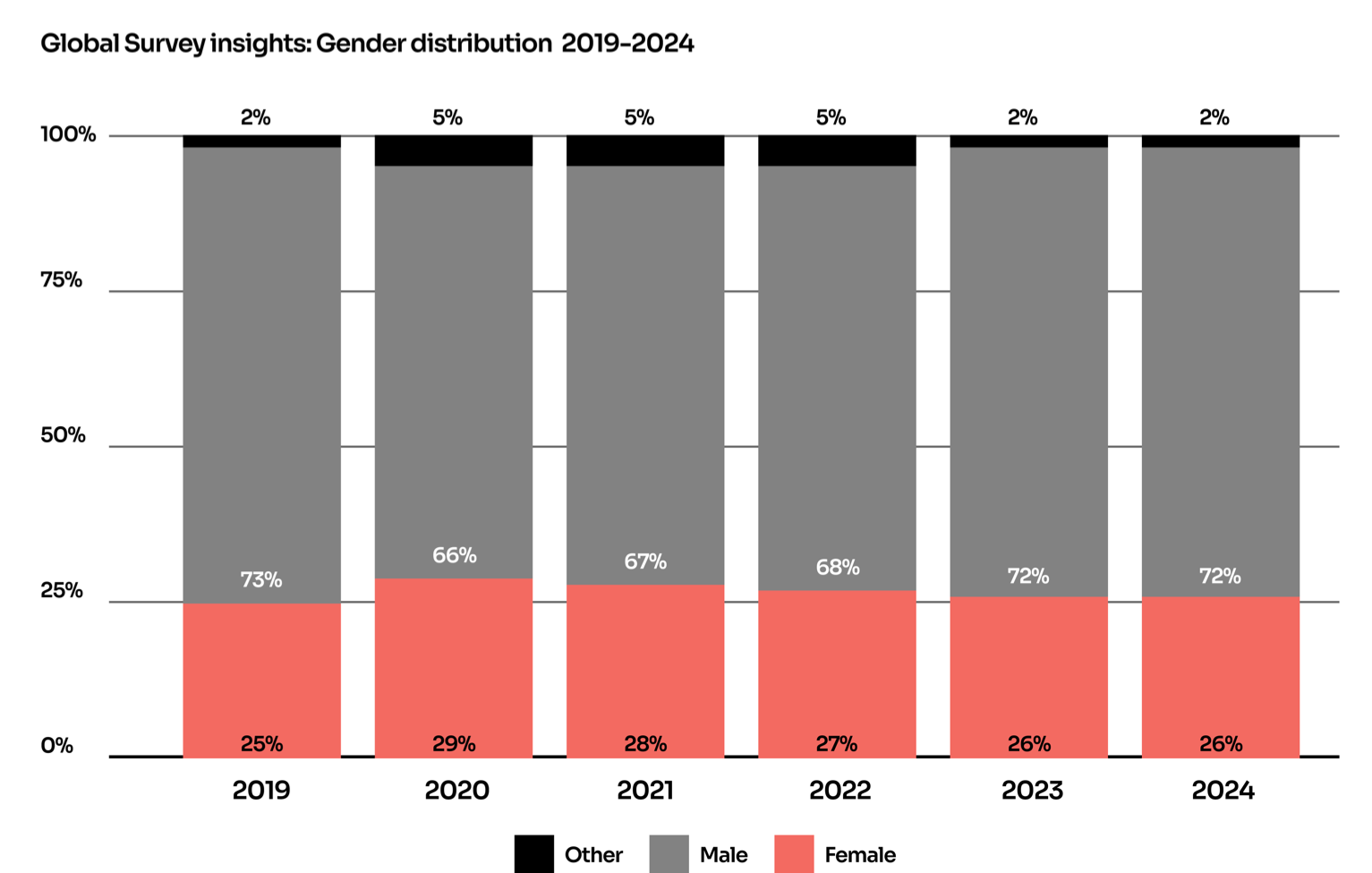
Three in four riders are men, and nobody knew why
Voi’s annual rider survey showed far fewer women than men, every year since 2019, but it couldn’t say why. It had been run by different teams each year, gender had only recently been added as a question, and it only reached people who already ride. There was nothing to build on.
Research
Why some women ride, and others don’t
To find out why women don’t ride, I asked the women who don’t. But I also turned the question around: the women who already ride had found their way past whatever stops the others, so what did they have that the others didn’t?
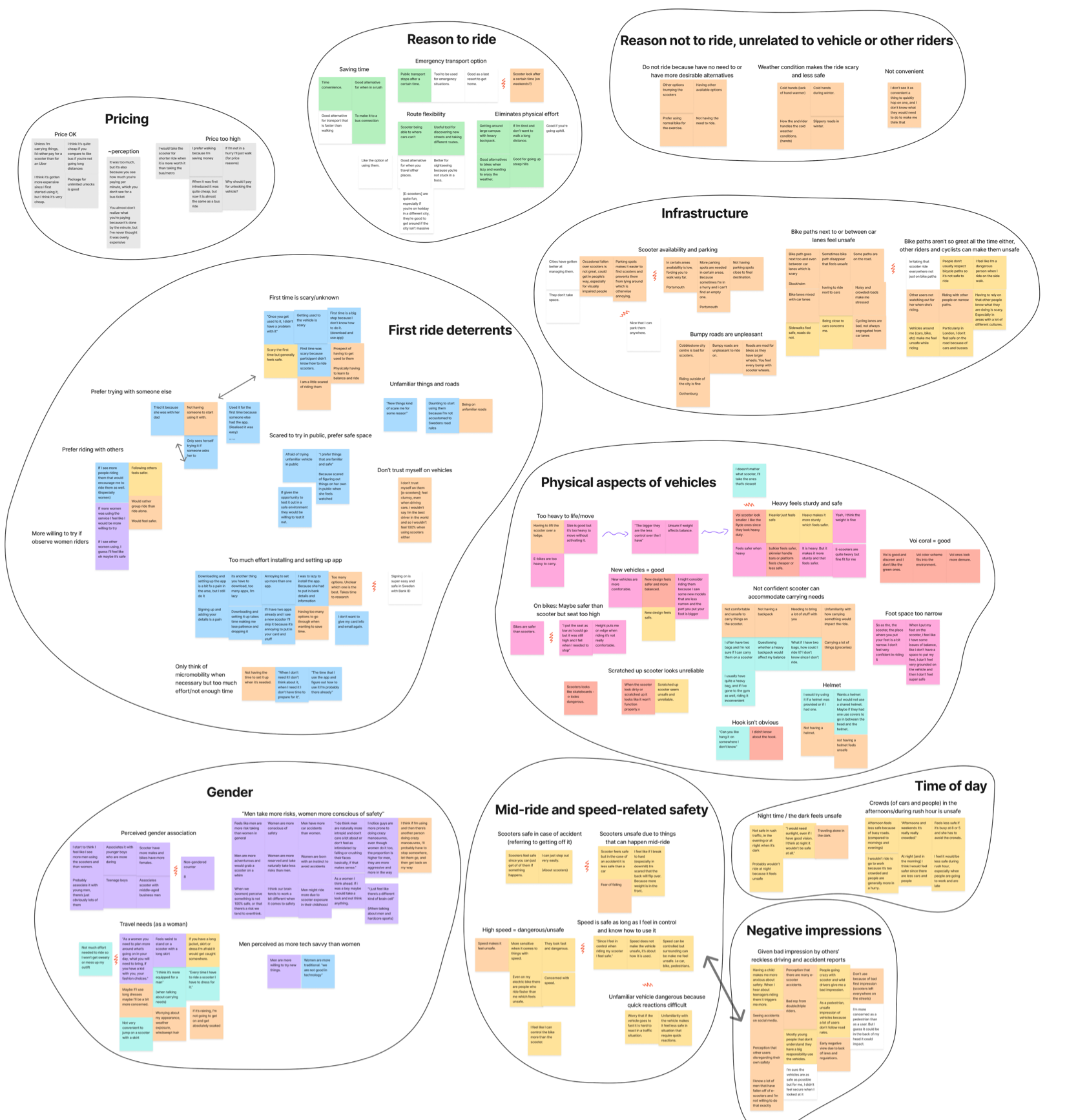
I started in Voi’s survey data and around ten external studies, looking for patterns among the women who ride. Then I interviewed 13 women in Sweden, Spain and the UK: women who had never ridden, women who had tried and stopped, and women who ride. Comparing what held some of them back with what got the others started showed where the real barriers were. I mapped everything they said in FigJam and grouped it into themes, which shaped every decision after that.
Findings
The hardest ride is the first one
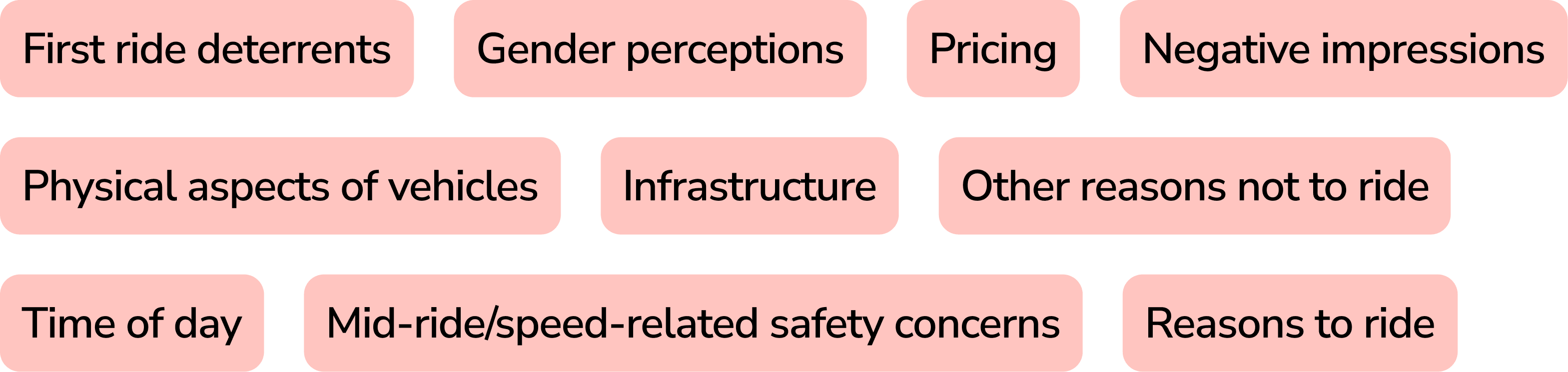
I grouped what I heard into ten themes, then ranked them by how often they came up and whether Voi could influence them. Four stood out:
Getting started takes too long
Downloading another app, creating an account and adding payment details felt like too much, especially in a hurry.
“In the time that I set up the app and figure out how to use it, I’m probably there already.”
The first ride is intimidating
Balancing, unfamiliar controls and riding in public made people hesitate, and nothing helped them feel ready.
“I don’t trust myself on them; I feel clumsy.”
Riding feels risky
Many of the women saw e-scooters as risky, shaped by safety concerns and ideas about who these vehicles are for.
Men “don’t feel as intimidated by falling or crushing their faces.”
The streets aren’t built for it
Cobblestones, shared bike lanes and cluttered parking made riding feel unsafe, especially near cars.
“Having to rely on other people to know what they are doing is scary.”
Most riders had someone to show them
Infrastructure is largely controlled by cities, and risk perception is shaped by culture. Neither is something an app can fix quickly. The sign-up and the first ride were different: Voi controls both, both came up again and again, and both hit at the same moment, right before someone’s first ride.
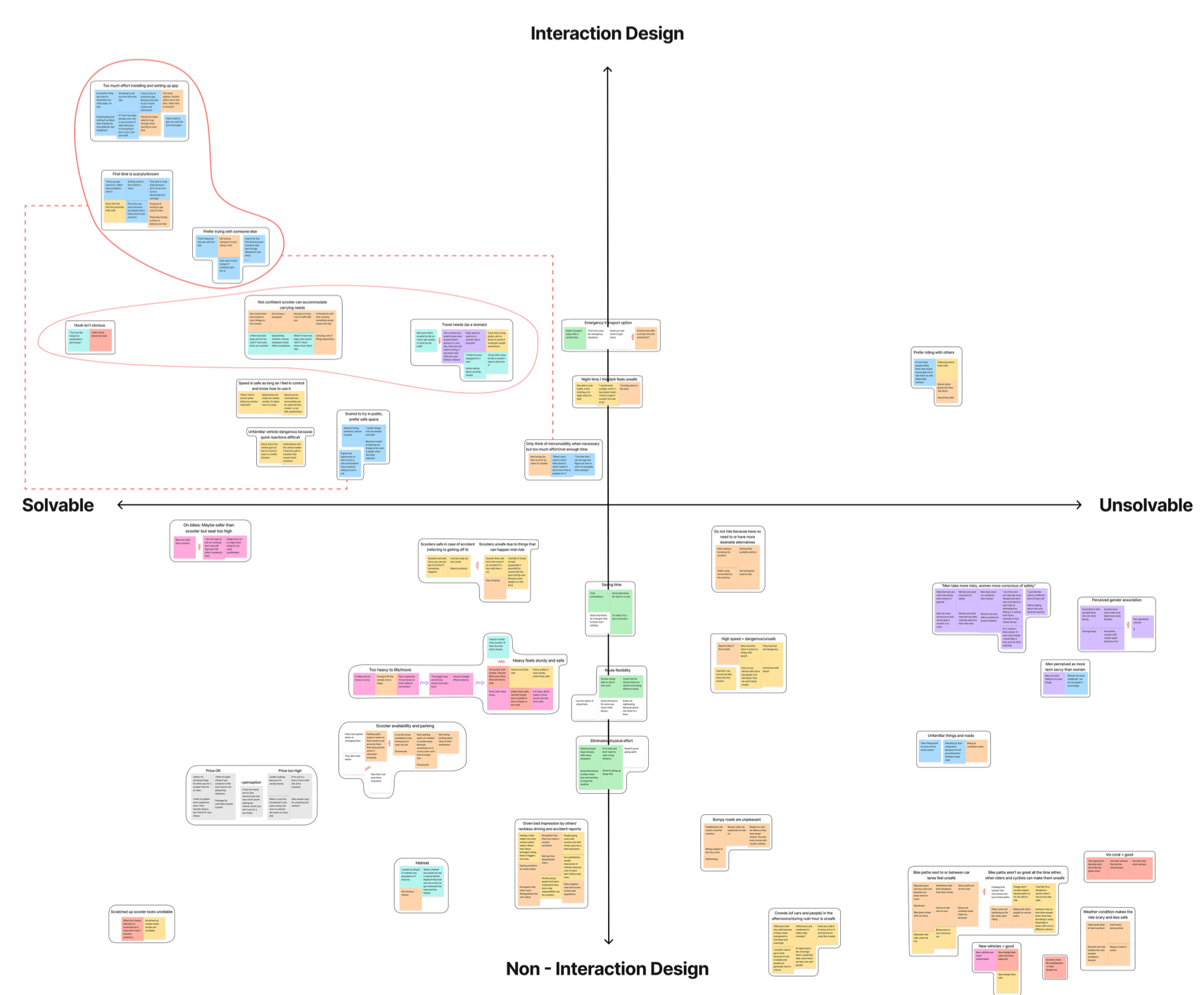
There was a clue in how the riders got started: most had taken their first ride with a friend or family member. Whatever I designed needed to be that person.
Concepts
The answer was both
Through Crazy 8’s, personas, storyboards and ideation workshops with Voi’s design team, I generated ideas ranging from a first-ride event and group-riding credits to achievements and new payment options. I rated each one on impact, feasibility, desirability and viability. Two stood out, one for each barrier:
- Voi in the browser: skip the app and the sign-up, and ride straight from a QR code.
- Ride Instructor Mode: an in-app guide that walks you through the scooter before your first ride.
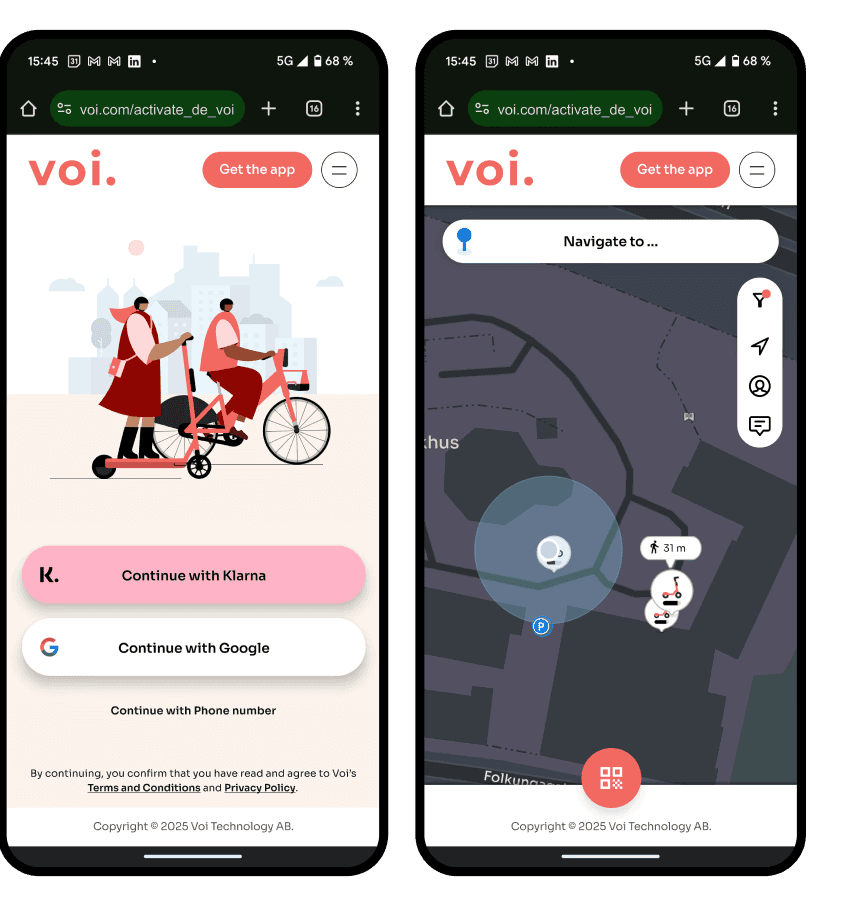
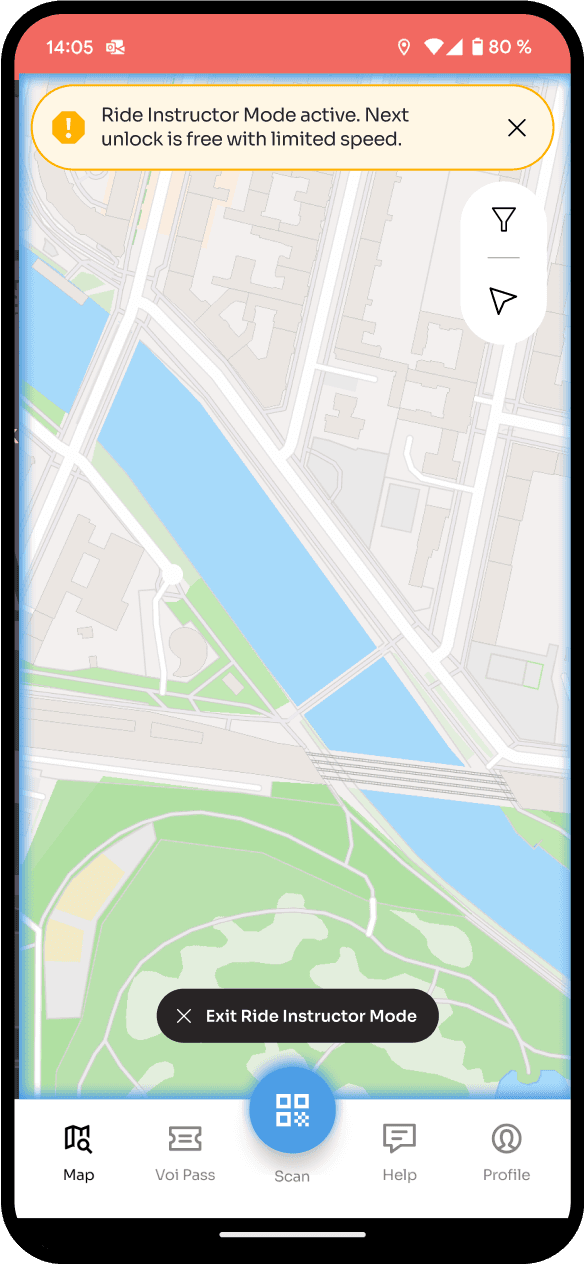
Scroll sideways →
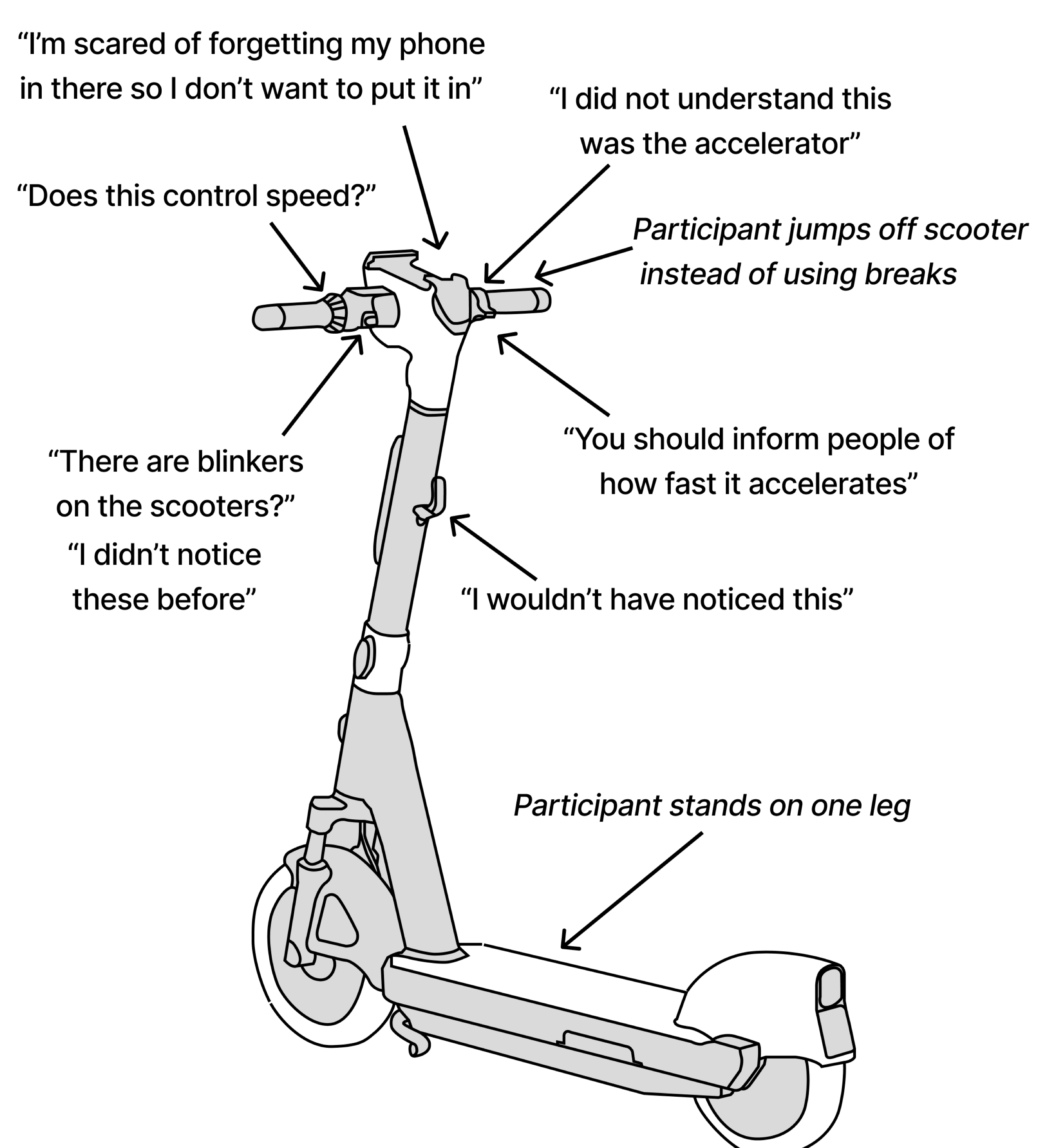
To see which direction held up, I tested lo-fi versions of both with Voi stakeholders and a focus group of five women who had never ridden. The answer was both: the stakeholders wanted the guide to work without the app, and the focus group showed which parts of the scooter it needed to explain. So I merged the two into one concept: Training Mode.
Solution
Learn the scooter before you ride it
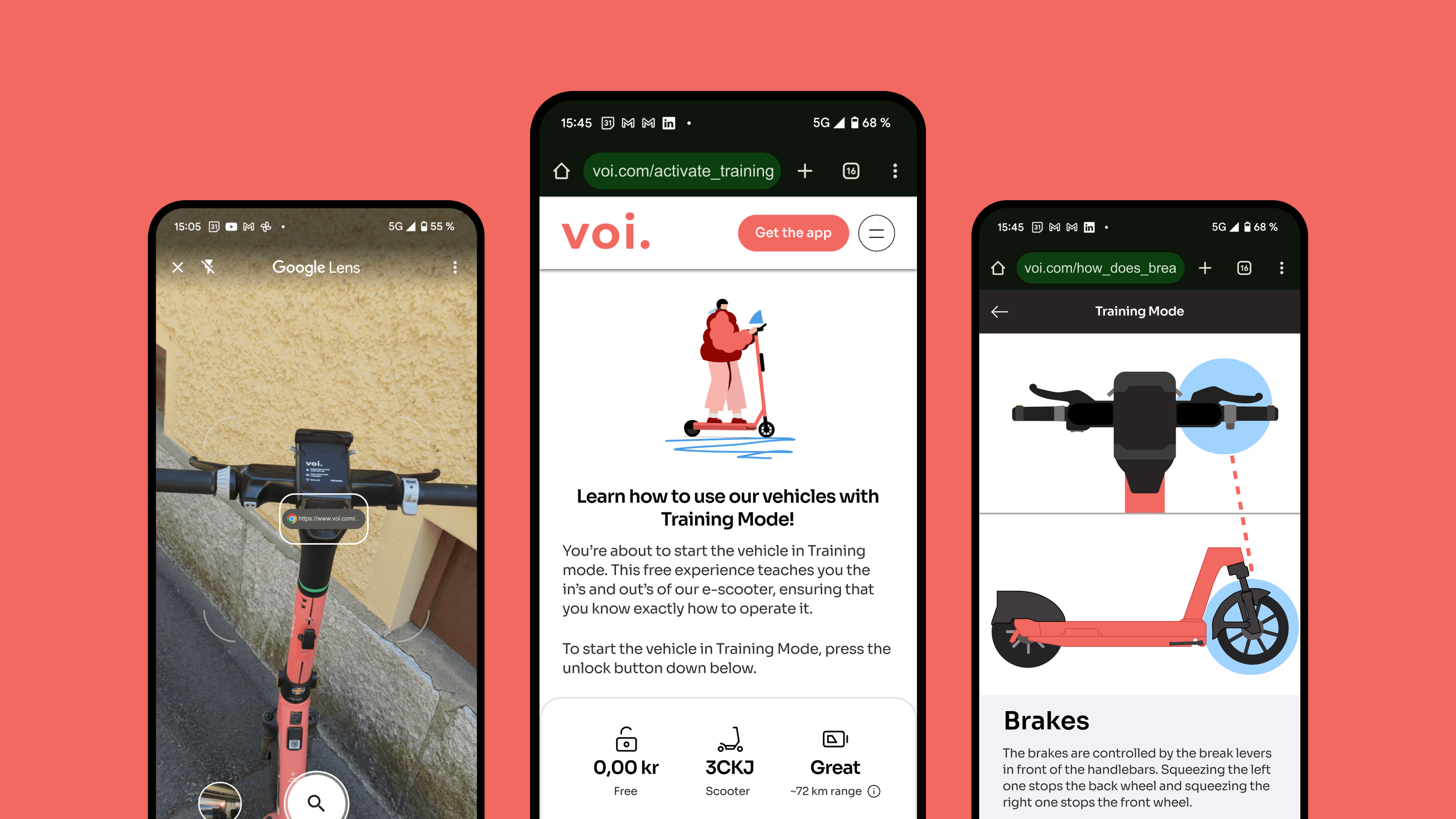
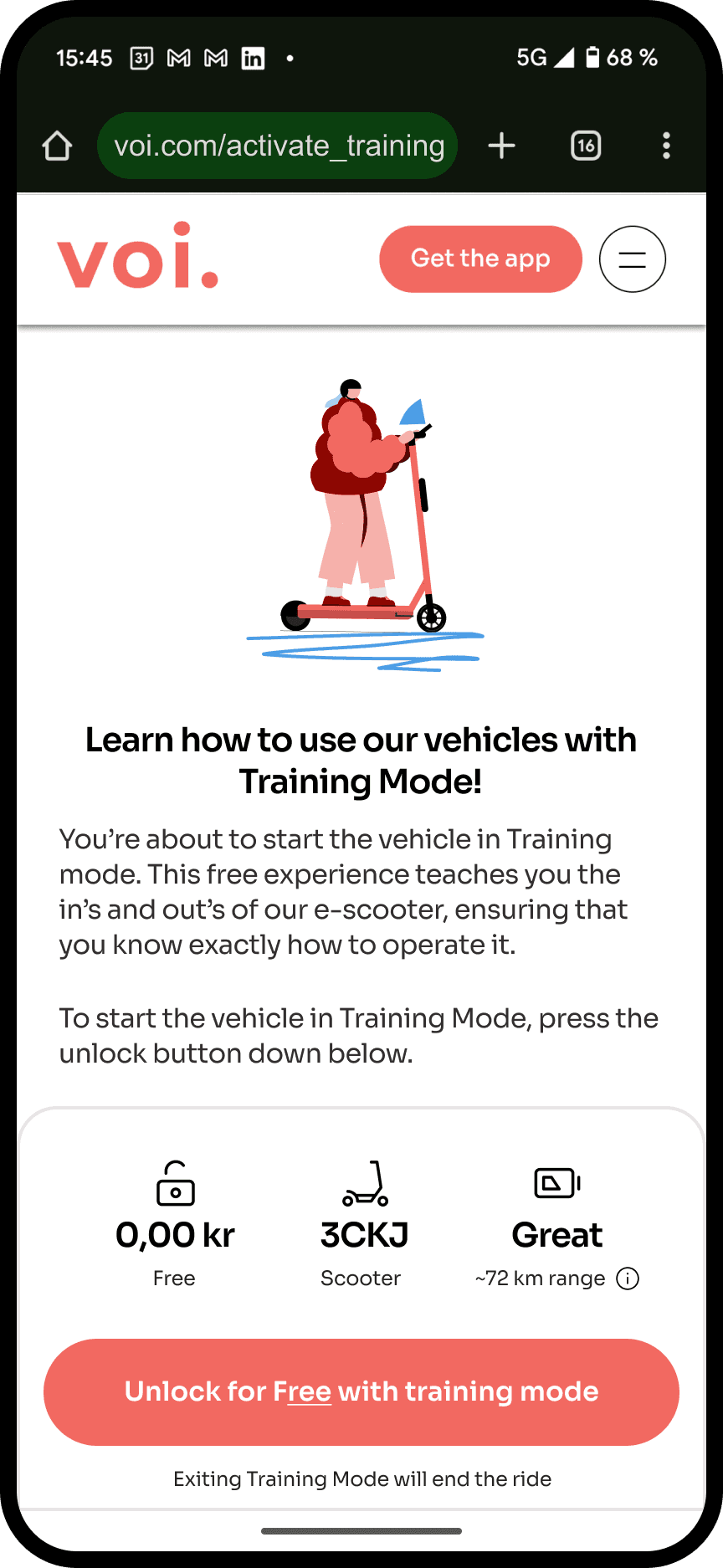
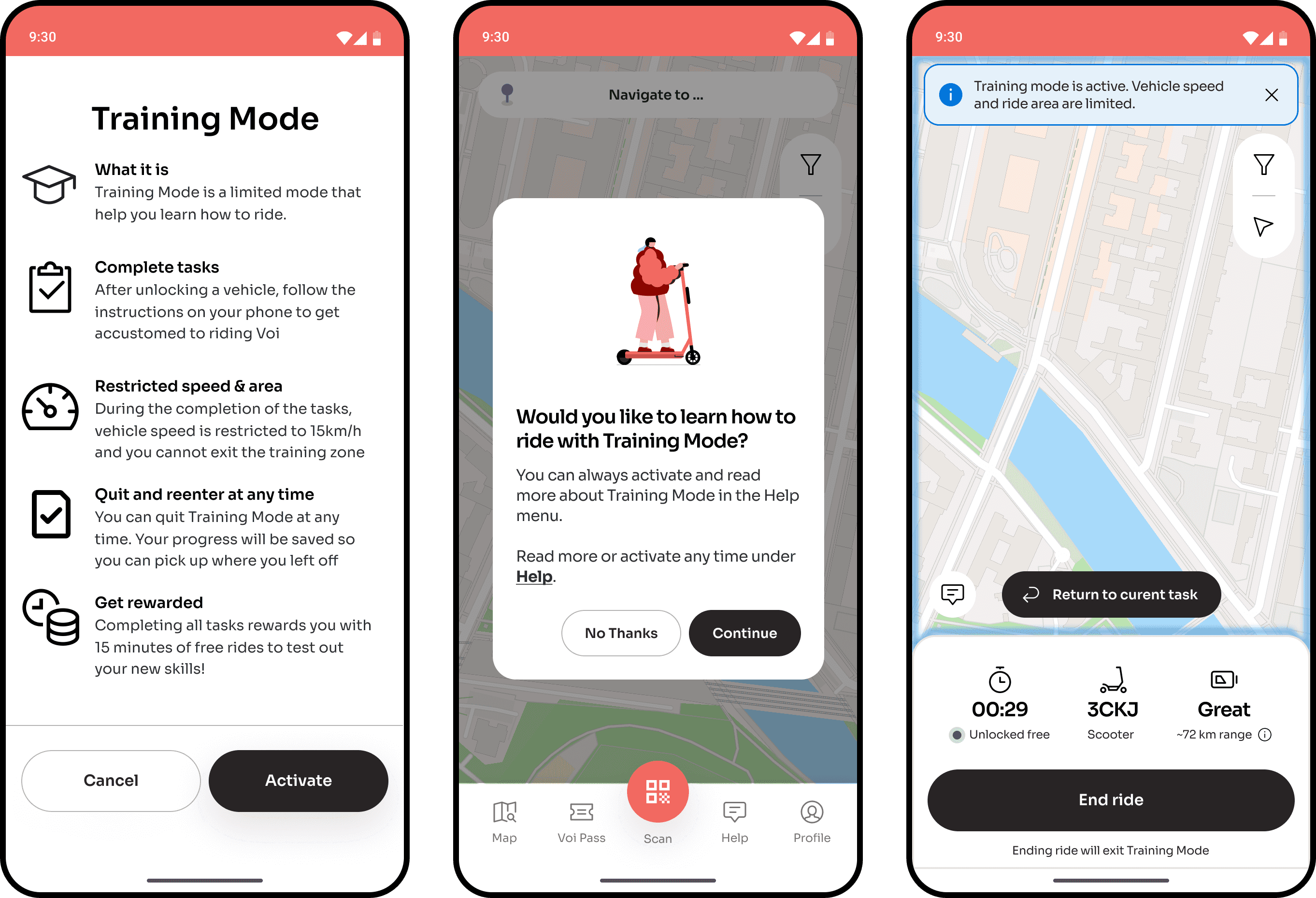
No app, no account and no cost. Point your phone’s camera at a scooter’s QR code and the browser walks you through riding it, step by step. While you train, speed is limited to 15 km/h and you can’t leave the training zone. You can stop and pick up where you left off at any time, and finishing earns you free riding time.
No app, no account, no cost
Scanning the QR code opens Training Mode straight in the browser, with the scooter unlocked for free. It uses Voi’s existing look and language, so everything learned carries over to regular rides.
Nine small steps instead of one big leap
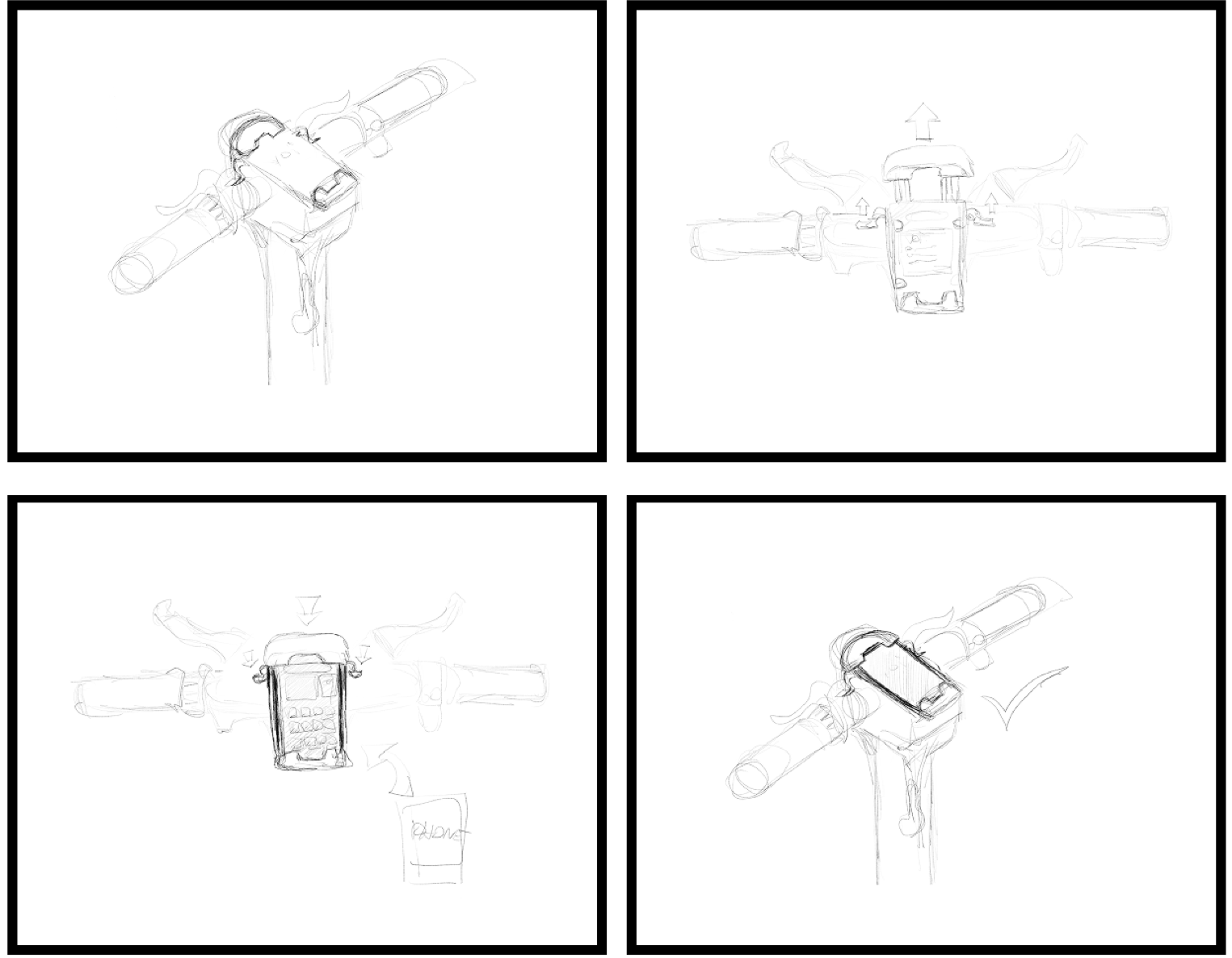
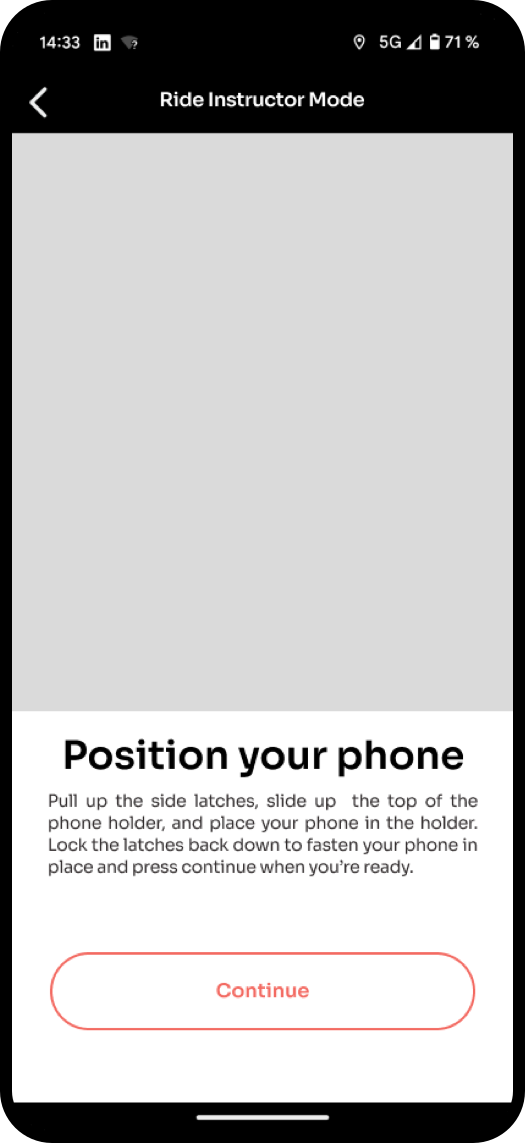
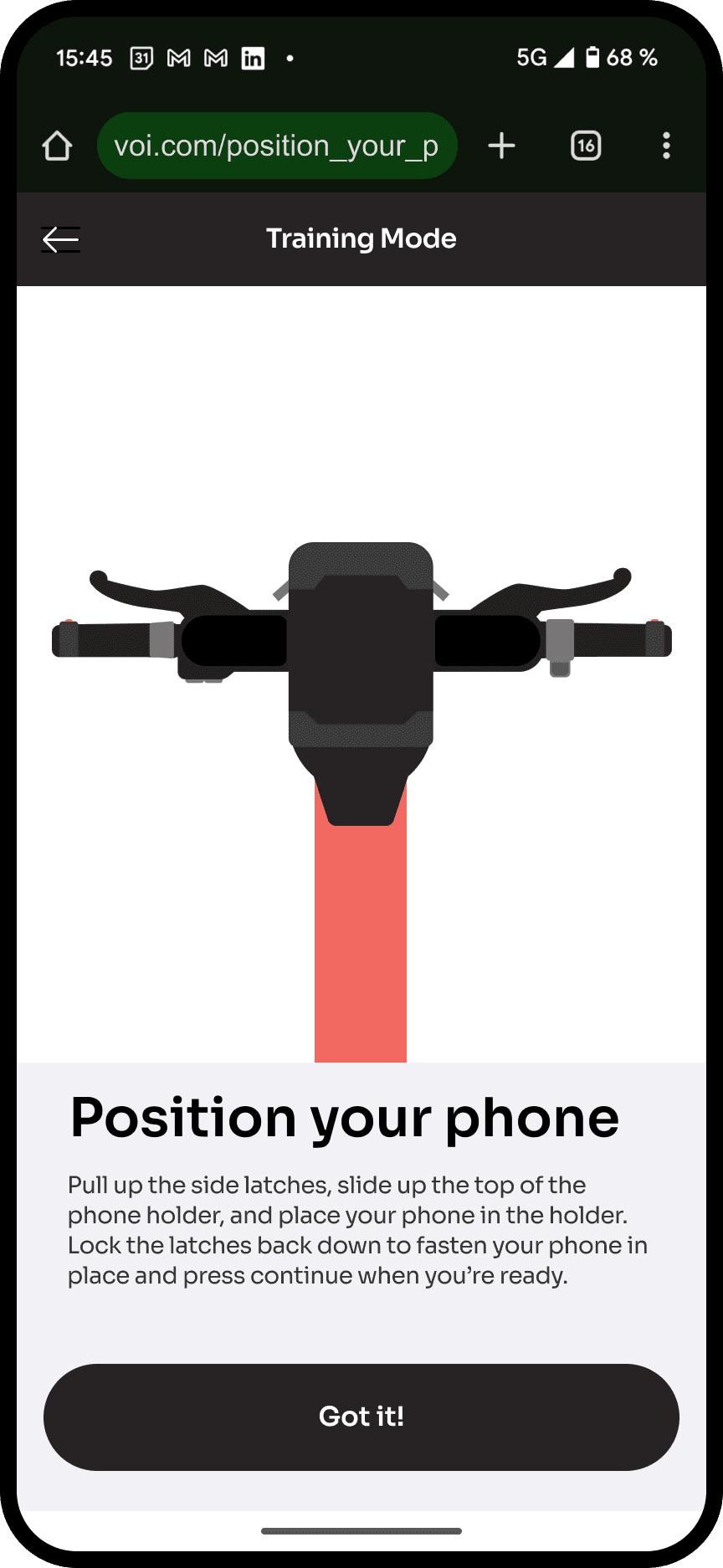
Training Mode breaks the first ride into nine short steps: positioning your phone, balance, the bell, blinkers, the info screens, brakes, the GO button and accelerating, ending with a reward. Each step has a short animation, built on a detailed model of Voi’s scooter, that shows exactly what to do, so it’s easy to copy on the real thing. These were concept animations, not final production assets.
Scroll sideways →
And for those who already have the app
Results
“The odds that I’ll try are better”
I tested the final prototype with 4 women who had never ridden an e-scooter. Each stood next to a parked scooter, scanned it with a phone and followed Training Mode while thinking aloud. Not needing an app, and the ride being free, was enough to make them consider trying, and the step-by-step instructions made them more confident.
“I don’t have a use for e-scooters but the odds that I’ll try are better because I don’t need to download an app.”
“Feel like it really wants me to learn how to do it correctly, which makes me want to learn and try it too.”
They found the illustrations clearer than Voi’s current onboarding. Their feedback was about the order of the steps, and about awareness: one said she would never notice Training Mode, because she doesn’t pay attention to scooters. Making it visible is the next design problem.
I presented the research, Training Mode and my recommendations to Voi leadership, and Voi is using the research and data to guide its future work.
Limitations and next steps
The sample was small, the solution focuses on e-scooters, and as a male researcher I was asking women about their experiences, which may have shaped what they shared. The natural next steps are a larger and more diverse study, a plan for making people aware of Training Mode, and a longitudinal study of whether it changes who rides. Voi confirmed its scooters can sense the brakes, blinkers, GO button and weight on the board, so a version that checks each step on the scooter itself is feasible, and the pilot participants said that would make it more fun.
What I’ll take with me
- Rough concepts get the best feedback. The biggest change in the project, moving Training Mode into the browser, came from stakeholders reacting to a lo-fi sketch.
- “Women” isn’t one target group. The mothers I spoke to worried about scooters because of their children; the students saw them as the quickest way across campus. A good solution had to work for both.
- Remove barriers before you try to persuade. No app, no account and a free first ride did more to make women consider trying than any message could.